
Following Vietnam, Thailand is also pushing to introduce the ‘first’ XR semiconductor education platform . XR-based semiconductor education innovation is gaining momentum in Southeast Asia.
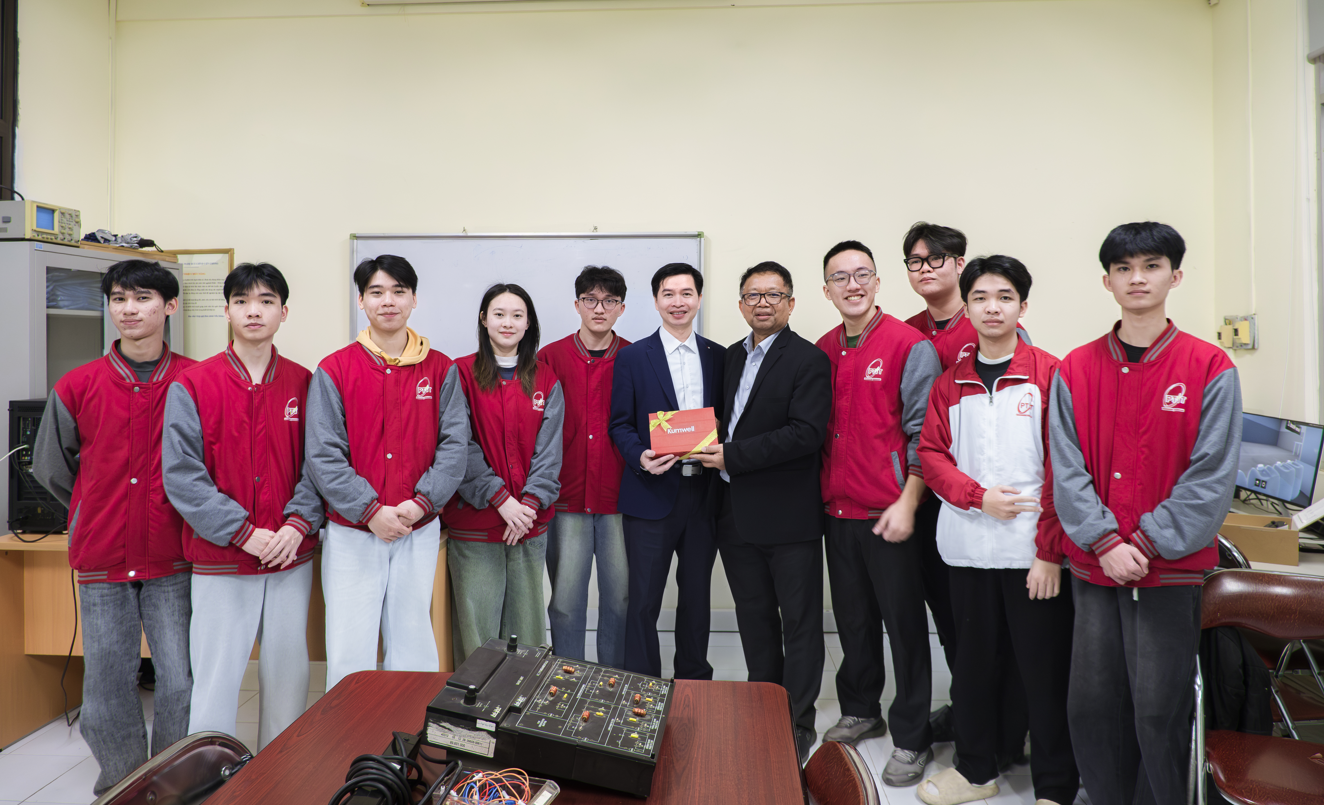
On February 9, 2026, faculty members from King Mongkut’s Institute of Technology Ladkrabang (KMITL), a prestigious engineering university in Thailand, visited the Posts and Telecommunications Institute of Technology (PTIT) in Vietnam. The purpose of the visit was to observe firsthand the actual classroom operation of Faraday XR S1, an XR-based semiconductor front-end process education platform, and to receive advice regarding its adoption.
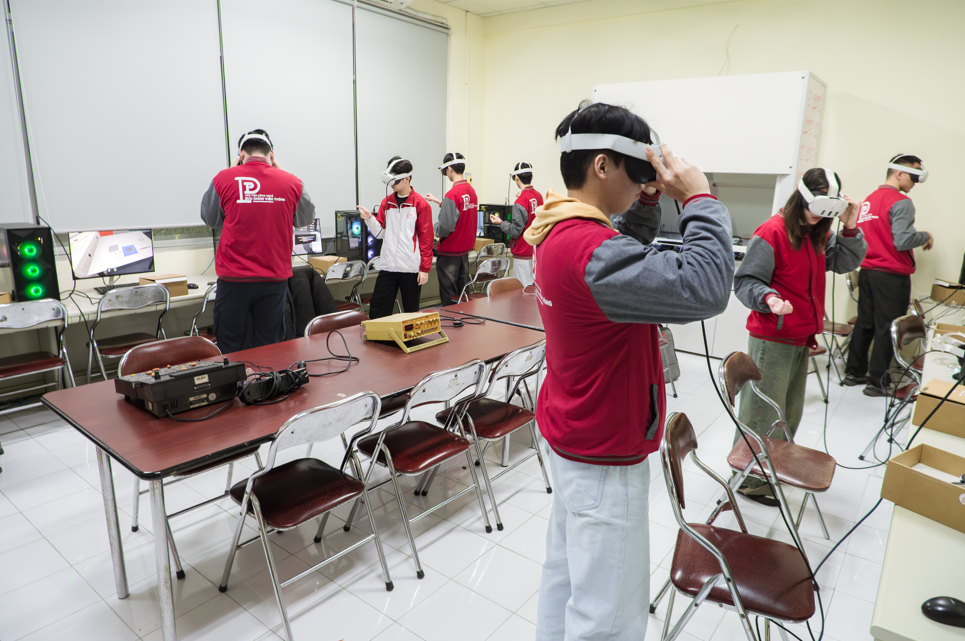
PTIT is the first university in Southeast Asia to incorporate XR-based semiconductor manufacturing process education into its regular curriculum. It is drawing attention for operating regular classes using a practice-oriented educational platform that implements the entire semiconductor front-end process step-by-step, rather than relying on simple experiential content.
The KMITL faculty closely examined PTIT’s classroom setup, instructor management structure, student participation in practical training, and evaluation system. In particular, they reportedly showed deep interest in the fact that the practical training process of setting process conditions and analyzing results in an XR environment is effective in improving understanding of actual industrial sites.
This visit is interpreted as going beyond mere benchmarking to signal a move to introduce an XR semiconductor education platform for the first time in Thailand. This is because, amidst increasing demand for skilled personnel in Thailand’s semiconductor and electronics industries, there is a growing consensus that it is necessary to establish a practice-based digital education infrastructure that moves beyond existing theory-centered training.
Faraday XR S1 is a platform designed to replicate the actual semiconductor front-end process flow in an XR environment, allowing learners to directly set process conditions and compare and analyze results. It is evaluated as providing a higher level of immersion and understanding compared to traditional educational methods, as it enables a systematic experience of the entire process, from operating process equipment and changing process variables to deriving quality results.
With the first implementation in Thailand following Vietnam, Faraday XR S1 is establishing itself as a platform demonstrating tangible educational effectiveness in Southeast Asia. The fact that overseas universities are considering adoption based on actual classroom applications indicates that its educational efficacy, as well as its technical completeness, is being recognized internationally.
Attention is focused on whether XR-based semiconductor education can spread, starting from Southeast Asia.
